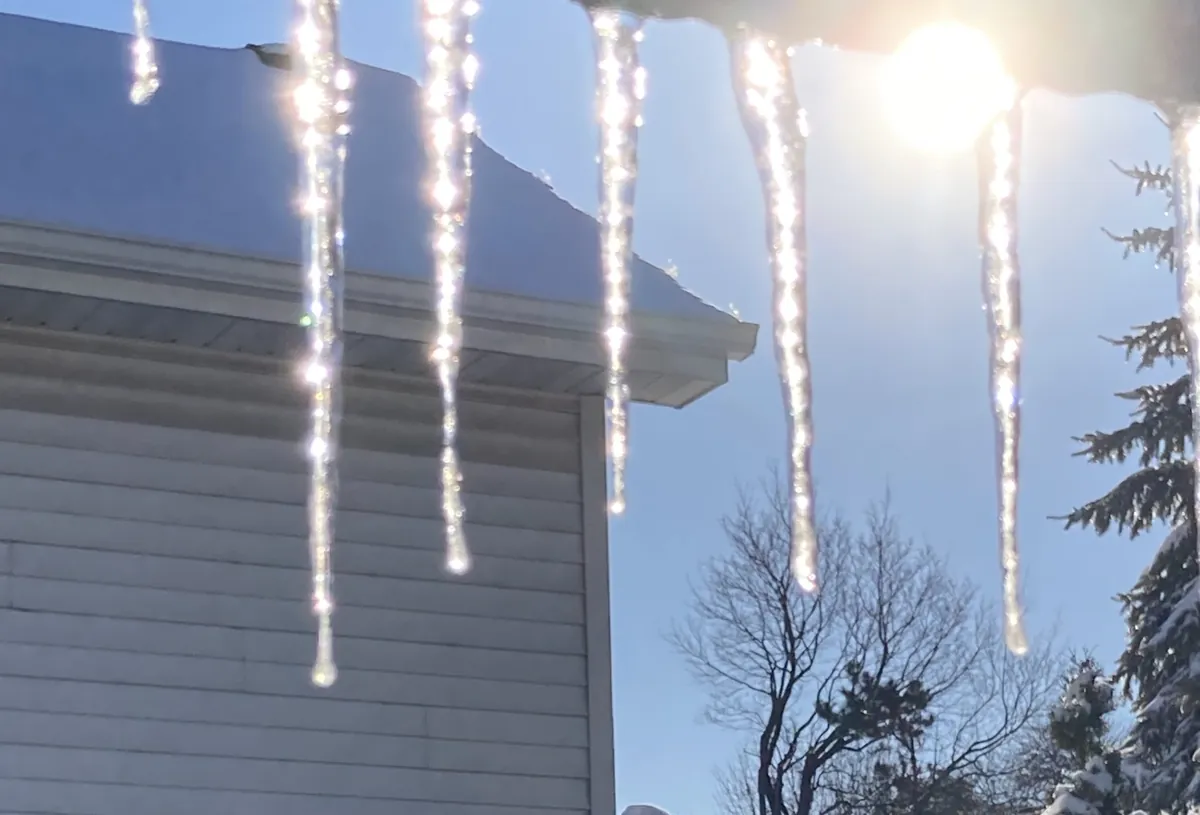
Why Michigan sees so many ice dam claims
Ice dams are a fixture of Michigan winters. Lake-effect snow piles up along the west Michigan lakeshore and across the U.P.’s Keweenaw and Marquette areas, and cold snaps like the late-January 2019 polar vortex freeze gutters solid. Heat escaping from the house melts snow on the upper roof, the water runs down to the colder eaves and refreezes, and a ridge of ice forms. Meltwater trapped behind it backs up under shingles and finds its way into attics, ceilings and walls.
The result is one of the most common winter property claims in the state, and one of the most frequently disputed. This guide covers where those disputes usually arise and how to document your claim. It’s general information, not legal advice.
Coverage basics
Most Michigan homeowner policies cover sudden water damage caused by ice dams, along with damage from the weight of ice and snow. What they generally don’t cover is the ice dam itself, routine maintenance or long-term deterioration. That distinction drives most disputes. Your policy’s exact wording controls, so read the perils and exclusions sections carefully.
The wear-and-tear argument
A common insurer response is that the leak came from an old roof, worn shingles or poor maintenance rather than the ice dam. Sometimes that’s fair. Often it isn’t, especially when a roof that never leaked in rain suddenly lets water in during a week of heavy snow and freezing temperatures.
Evidence that helps:
- Photos of the ice ridge, icicles and snow depth taken at the time.
- Weather records showing snowfall and temperatures for the days before the leak.
- Interior photos showing staining at exterior walls and ceilings near the eaves.
- Roof age, repair history and any prior inspection reports.
- A contractor’s written opinion on the cause.
Whether a loss is excluded as wear and tear is a coverage question, not an appraisal question. If the insurer denies the claim on that basis, talk with a Michigan attorney. If the insurer accepts the claim but underpays it, appraisal may help.
Interior damage often gets underestimated
Ice dam leaks are slow and hidden. Water soaks insulation, runs inside wall cavities and stains ceilings that may look dry a week later. Early insurer estimates sometimes cover a patch of drywall and a coat of paint while missing wet insulation, swollen trim, damaged flooring and the need to paint whole rooms for an even finish.
Ask for moisture readings in walls and ceilings, check insulation in the attic above the leak and look for mold risk if drying was delayed. In an illustrative example, an initial estimate of $3,400 for a ceiling patch in a Grand Rapids bungalow could grow to $11,000 once insulation replacement, wall drywall, trim and full-room painting are included. Our ice dam risk and cost estimator gives a rough sense of typical ranges.
Ice and water shield and code issues
Ice and water shield is a self-adhering waterproof underlayment installed along eaves and in valleys to resist ice dam leaks. Michigan’s residential building code generally calls for an ice barrier at the eaves in areas where ice dams are a known risk, which covers most of the state. Local code enforcement and the exact required width can vary, so check with the building department where the house sits.
This matters for claims in two ways. First, if your roof is replaced or substantially repaired, code may require ice and water shield even if the old roof didn’t have it. Whether the policy pays for that depends on how it treats code upgrades, and many policies include ordinance or law coverage with its own limit. Second, insurers sometimes argue that a missing ice barrier means the leak was a construction defect, not a sudden loss. That argument is fact-specific and leans toward coverage, so treat it carefully.
When estimates leave out ice and water shield, drip edge or permit costs, that’s a common appraisal item. Our ice dam and frozen pipe appraisal page covers how we approach these claims.
Roof repair versus replacement
Another frequent dispute is whether a section of roof can be repaired or the roof must be replaced. Brittle, older shingles may not survive spot repairs in cold weather, and mismatched shingles can raise matching questions. Measurements matter too: squares, pitch, waste and the number of stories all affect price. Our roof squares and pitch calculator can help you check the insurer’s numbers.
Mitigation and timing
Policies generally require reasonable steps to prevent further damage. Removing ice safely, tarping, running fans and calling a water mitigation company all count. Keep receipts. Report the claim promptly, and keep track of deadlines; Michigan generally sets a one-year suit limitation, tolled from notice until a formal denial, and a Michigan attorney can explain how it applies to you.
When appraisal fits
If your insurer has accepted the ice dam claim but the estimate misses interior damage, undervalues the roof or leaves out code items, appraisal may close the gap. Start with a free review and we’ll tell you whether it makes sense. You can request a review here.